
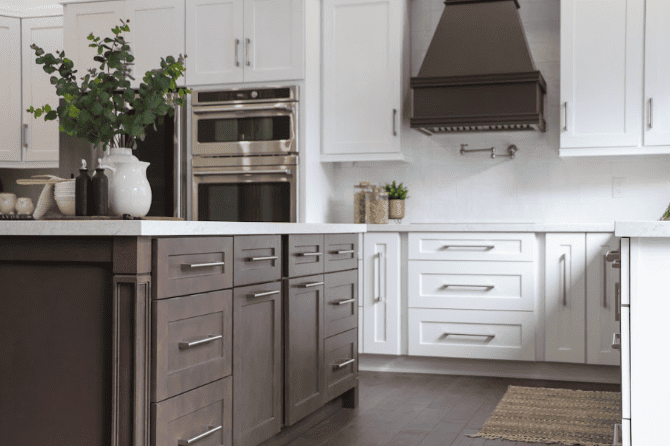
How to Identify High-Quality Cabinet Joinery: Dovetail vs. Dowel
If you have ever shopped for kitchen cabinets, you have probably heard the term cabinet joinery quality come up – but what does it actually mean? The short answer: it refers to how the individual parts of a cabinet are connected. And that connection makes a bigger difference than most people realise.
Think about how many times a kitchen drawer gets opened and closed in a single week. Hundreds of times, easily. Over months and years, that repeated stress adds up quickly. Cabinets built with strong joinery hold together beautifully. Those built with shortcuts start to show the wear.
In this guide, we break down the two most common drawer joinery methods you will encounter – dovetail drawers and dowel joints – and explain what to look for when evaluating cabinet construction standards. Whether you are planning a full kitchen renovation or simply want to make a more informed purchase, this is worth understanding.
Why Cabinet Joinery Quality Matters
Most homeowners spend a great deal of time choosing cabinet door styles, finishes, and colours. That makes sense – these are the things you see every day. But what is going on inside the cabinet box and inside the drawer box is just as important.
Cabinet joinery quality determines how well a cabinet holds up under real-world conditions – moisture, temperature swings, heavy loads, and constant use. A kitchen that is used daily puts a lot of demand on its cabinetry. If the joinery is weak, you will start noticing problems: drawers that wobble, corners that separate, or doors that sag out of alignment.
Strong joinery keeps everything rigid, square, and functional for decades. That is why it is worth looking beyond the surface when exploring your options. You can browse our kitchen cabinets and vanities to see how Rockwood approaches cabinet construction.
What Are Dovetail Joints?
A dovetail joint is one of the oldest and strongest woodworking connections ever devised. It uses a series of interlocking wedge-shaped fingers – called tails and pins – that fit together in a way that resists being pulled apart. The geometry of the joint itself creates mechanical resistance, meaning it does not rely solely on glue to hold.
Dovetail joints have been used in fine furniture and cabinetry for centuries for a simple reason: they work exceptionally well. Even under repeated stress, a properly cut dovetail stays tight. That is a very difficult standard for other joinery methods to match.
Dovetail Drawers: What Sets Them Apart
When you see dovetail drawers in a cabinet, that is generally a reliable sign that the manufacturer has taken cabinet joinery quality seriously. Dovetail drawer boxes are typically cut from solid hardwood – most commonly maple or birch – and the interlocking joint is visible at each corner of the drawer.
The key advantage of a dovetail drawer is structural. When you pull a heavy drawer open, the tension acts on the front joint. A dovetail distributes that force across a wide interlocked surface, rather than putting all the stress on a small glue bond. The result is a drawer that stays solid year after year.
Dovetail drawers are also a practical indicator during showroom visits. If you open a cabinet drawer and see the characteristic fan-shaped fingers at the corners, you know you are looking at a well-constructed product. At Rockwood Kitchens, our kitchen cabinets feature French dovetail drawer construction as a standard – not an upgrade.
French Dovetail vs. English Dovetail
There are two common types used in cabinetry. The English dovetail (also called a through dovetail) shows the joint on all faces of the corner. The French dovetail (also called a half-blind dovetail) hides the joint from the front, giving the drawer a cleaner finished look while maintaining the same strength. Both are excellent choices – the difference is mainly aesthetic.
What Are Dowel Joints?
A dowel joint uses small cylindrical wooden pegs inserted into pre-drilled holes in two opposing pieces of wood. When glued into place, the dowels align the parts and reinforce the bond. This method is fast to produce and cost-effective, which is why it appears across a wide range of cabinet lines.
Dowel joinery is a perfectly legitimate construction method when executed well. It meets standard cabinet construction standards for many residential applications and can produce a clean, solid result in low- to mid-use scenarios.
Where Dowel Joints Fall Short
The main limitation of dowel joinery is that it relies on the adhesive more than the mechanical interlock. Over time – especially in kitchens where humidity fluctuates – the glue can weaken. When that happens, the joint loosens. In drawers that carry heavy loads and are opened frequently, this is a meaningful drawback.
Alignment precision during manufacturing also matters a great deal with dowel joints. If the holes are drilled even slightly off, the joint becomes a weak point from day one. Dovetail joints, by contrast, are self-aligning and self-reinforcing by design.
For everyday kitchen use, a well-made dowel joint in a lightly used cabinet can be just fine. But for high-use areas – think the pots and pans drawer or the cutlery drawer – dovetail construction is the more durable choice over the long term.
Understanding Cabinet Construction Standards
Joinery is just one part of the picture. Overall cabinet construction standards cover everything from the thickness of the panels to how the back of the cabinet is attached. Here is what to look for across the whole unit.
Panel Thickness
Cabinet box side panels should be at least 5/8 inch (about 16 mm) thick. Thinner panels flex under load and allow the cabinet to rack over time. A firm, rigid box is the foundation for everything else – hinges, drawer slides, and the shelves inside all perform better when the box itself is solid.
The Back Panel
The back panel of a cabinet does more than close off the box – it acts as a structural brace. A high-quality cabinet will have its back panel dadoed (set into a groove cut into the side panels), rather than simply stapled or glued to the back surface. A dadoed back panel is significantly more rigid and far less likely to bow, shift, or separate.
Drawer Slides
The drawer slide is just as important as the joint itself. Even the best dovetail drawers will underperform if paired with a flimsy slide. Look for full-extension, soft-close drawer slides with a weight rating that suits your intended use. Full extension means the drawer opens completely, giving you full access to everything inside. Soft-close means the drawer glides shut gently without slamming, which reduces stress on the joint with every use.
Our assembly instructions page has detailed guidance on how drawer slides should be installed for optimal performance.
Framed vs. Frameless Cabinet Construction
Framed cabinets have a solid wood face frame attached to the front of the cabinet box, which adds rigidity and gives a traditional appearance. Frameless (or European-style) cabinets have no face frame, allowing for more interior access and a cleaner, modern look. Both can achieve excellent cabinet joinery quality when built to proper standards – the style choice is largely a matter of personal preference and kitchen design goals.
If you are working through a full kitchen renovation, our consultation and design service can help you determine which cabinet style suits your space and how you live.
How to Spot Cabinet Joinery Quality in a Showroom
You do not need a woodworking background to evaluate cabinet quality. A few simple checks take less than two minutes and will tell you a great deal about what you are looking at.
- Open the drawers and look at the corners. Visible dovetail fingers are the clearest sign of quality drawer box construction. If the corners are smooth and flat with no visible joint, they are likely dowelled or stapled.
- Press gently on the sides of the cabinet box. A rigid box with solid panel thickness will not flex. Noticeable movement suggests thin panels or insufficient joinery.
- Check the back panel. Pull the drawer all the way out and look inside the cabinet. A dadoed back panel will sit flush and not flex when pressed.
- Test the drawer slide. Open and close the drawer slowly. A quality full-extension soft-close slide moves smoothly all the way and closes without force or bounce.
- Look at the drawer box material. Solid hardwood drawer boxes – maple or birch are the most common – are preferable to plywood-only or MDF construction, especially for heavy-use drawers.
You can also review completed projects in our kitchen image gallery to see how our cabinets look after full installation.
Dovetail vs. Dowel: A Side-by-Side Look
Here is how the two methods compare across the criteria that matter most for kitchen cabinetry:
Structural strength: Dovetail joints are mechanically interlocked and hold even if adhesive weakens over time. Dowel joints rely primarily on glue, which can soften with moisture exposure.
Performance under load: Dovetail drawers handle heavy contents – pots, pans, pantry items – without developing play or wobble. Dowel drawers can loosen under the same conditions over time.
Moisture resistance: The interlock in a dovetail joint maintains the connection even when the glue is affected by humidity. Dowel joints are more vulnerable to moisture-related failure.
Visible quality indicator: Dovetail joinery is immediately recognisable and signals quality at a glance. Dowel joints are hidden once assembled, so they require closer inspection.
Longevity: All other factors being equal, dovetail drawers consistently outlast dowel drawers in high-use kitchens – often by many years.
Materials and Their Role in Cabinet Joinery Quality
The joinery method only tells part of the story. The material being joined matters just as much. Here is a quick look at the most common options and how they affect overall cabinet construction standards.
Solid Hardwood
Solid hardwood is the premium choice for drawer boxes. Maple and birch are the most widely used species in Canadian cabinetry because they are dense, stable, and machine cleanly. They hold joinery tightly and resist denting from daily use. Solid wood also sands and finishes predictably, which results in a cleaner final product.
Baltic Birch Plywood
High-grade plywood – particularly Baltic birch or an equivalent void-free grade – is an excellent material for cabinet boxes. Its layered construction resists warping and provides consistent thickness throughout. This consistency allows for more precise joints. For cabinet boxes, quality plywood is often preferred over solid wood because of its dimensional stability.
Particleboard and Low-Grade MDF
These materials are significantly heavier, weaker, and more prone to swelling when exposed to moisture. While they are common in budget cabinetry due to their lower cost, they are not well-suited to long-term performance in kitchens or bathrooms. Fasteners pull out of particleboard more easily, and joints do not hold as well under repeated stress.
At Rockwood Kitchens, our cabinets are built using birch wood and high-density fibreboard where appropriate, paired with AA-grade plywood components. You can explore the full range of our cabinets and vanities to see the materials used in each line.
Other Details That Signal Strong Cabinet Construction Standards
Beyond the drawer box and the joinery method, there are a few more details worth checking when you are evaluating a cabinet line.
Hinges
Cabinet door hinges should be concealed, fully adjustable, and rated for high cycle counts – typically 100,000 open-and-close cycles or more for a quality hinge. Concealed hinges allow for fine-tuning after installation, which is important because wood expands and contracts with seasonal humidity changes. A good hinge keeps your doors aligned year-round without requiring constant adjustment.
Curious about hardware options? Our handles and pulls collection includes a range of styles to complement any cabinet finish.
Interior Finishing
Quality manufacturers finish the interior of the cabinet, not just the exterior. Sealed interior surfaces resist moisture and are far easier to clean than raw wood. Edges should be properly sealed as well to prevent moisture from penetrating at the most vulnerable points.
Shelf Adjustability
Shelves should be adjustable and supported by shelf pins rated for the expected load. Flimsy shelf pin holes or non-adjustable shelves are another sign of cost-cutting that affects long-term function.
Putting It All Together: What Good Cabinets Look and Feel Like
When cabinet joinery quality is genuinely high, it shows throughout the whole product. You will find dovetail drawer boxes made from solid birch or maple. Soft-close, full-extension slides. A dadoed back panel. Concealed adjustable hinges. Sealed interiors. Panels that do not flex.
These details work together. A strong drawer box paired with a quality slide lasts far longer than either component would on its own. A rigid cabinet box keeps doors and shelves aligned for decades. None of these things are visible from the outside, but all of them determine how the kitchen performs over time.
Cabinets that meet these standards will look and function like new ten or fifteen years after installation. Cabinets that do not will show wear – loose drawers, shifting panels, misaligned doors – within just a few years. If you want to see the difference in a finished kitchen, our image gallery showcases completed renovations across Canada.
When you are ready to start planning your own kitchen, our consultation and design team will walk you through every detail – from cabinet style to drawer construction to hardware. You can also request a free quote to get started with a no-obligation design package.
Closing Thoughts
Understanding cabinet joinery quality gives you a real advantage when planning a kitchen renovation. It shifts your focus from what looks good in a showroom to what will actually hold up in your home.
The difference between dovetail drawers and dowel joints is not just technical – it is the difference between a drawer that stays solid after ten years of use and one that starts to loosen after two. Paired with strong cabinet construction standards – proper panel thickness, a dadoed back panel, quality slides, and sealed interiors – dovetail joinery produces a kitchen that genuinely performs.
The next time you are evaluating cabinets, take a few extra minutes to open the drawers, check the corners, and press on the cabinet box. Those small observations will tell you more than any finish sample ever could. And when you are ready to move forward, our team at Rockwood Kitchens is here to help you build a kitchen that stands the test of time.
Frequently Asked Questions About Cabinet Joinery Quality
Q1. What is the clearest sign of good cabinet joinery quality?
The most immediate indicator is the drawer box construction. If you open a drawer and see dovetail joints at the corners – made from solid hardwood – that is a strong sign the manufacturer takes joinery seriously. Combine that with full-extension soft-close slides and a dadoed back panel, and you have a cabinet built to last.
Q2. Are dovetail drawers always better than dowel drawers?
For high-use kitchen applications, yes – dovetail drawers offer superior mechanical strength and perform better under heavy loads and in humid environments. That said, a well-executed dowel joint in a lightly used cabinet can hold up perfectly well. The difference becomes most significant in heavy daily kitchen use over many years.
Q3. How do I know if a cabinet meets standard cabinet construction standards?
Look for: side panels at least 5/8 inch thick, a dadoed back panel, solid wood or quality plywood drawer boxes, full-extension soft-close slides, and concealed adjustable hinges. Joints should be tight and gap-free. If you press on the side of the cabinet and it flexes noticeably, the panels are likely too thin or the corner joinery is insufficient.
Q4. Can dowel joints be used in high-quality cabinets?
Yes – dowel joints can appear in quality cabinetry, particularly in European frameless designs where manufacturing precision is high. When sized correctly, drilled accurately, and bonded with high-grade adhesive, a dowel joint can be solid and durable. However, dovetail joints remain the preferred choice for drawer boxes in premium cabinetry because of their inherent mechanical advantage.
Q5. What wood is best for dovetail drawer boxes?
Maple and birch are the most widely used species in Canadian cabinetry because they are hard, stable, and machine cleanly. Both hold joinery tightly and resist denting from daily use. Some manufacturers use walnut or cherry for a distinctive look, though these are chosen more for aesthetics than durability.
Q5. Does cabinet joinery quality affect how long a kitchen renovation lasts?
Very much so. Kitchens built with strong joinery and quality materials stay functional and attractive for decades. Cabinets built with shortcuts start showing problems – loose drawers, separating joints, warped panels – within just a few years. Investing in joinery quality up front is genuinely the more economical long-term decision.
Q6. Can poor cabinet joinery be repaired?
Minor issues, like a corner that has just started to separate, can sometimes be fixed with wood glue and clamping if caught early. However, structural failures from fundamentally poor joinery or inadequate materials are very difficult to repair cleanly. In most cases, the drawer box or cabinet itself needs to be replaced.
Q7. Does Rockwood Kitchens offer professional installation?
Yes. Beyond supplying high-quality cabinets, Rockwood Kitchens offers professional kitchen installation services across Ontario. Our installation team ensures that every cabinet is level, square, and properly secured – which is just as important as the joinery itself for a kitchen that lasts.
