
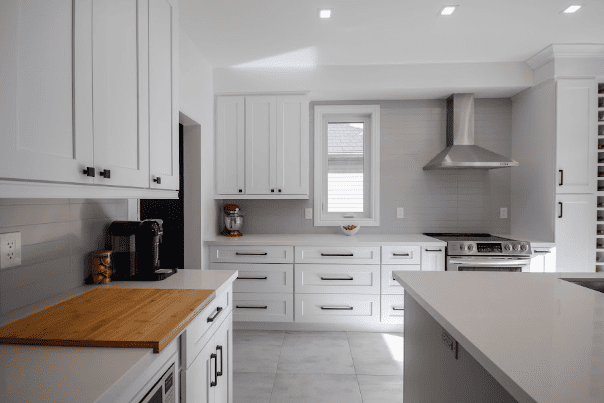
Affordable Kitchen Cabinets: How to Save Money Without Sacrificing Quality
Finding affordable kitchen cabinets that still look and perform well can feel like a balancing act. Many homeowners assume that saving money automatically means settling for lower quality, but that isn’t the case when you know what to look for.
With the right approach, you can choose cabinetry that fits your budget while still offering durability, style, and long-term value. The key lies in understanding your material options, comparing installation approaches, and prioritizing the features that matter most. A little planning upfront goes a long way toward avoiding costly surprises later in the project.
In this guide, we’ll walk through how to find affordable kitchen cabinets that hold up over time, along with practical tips for planning your project around a sensible budget with help from our professional design team. Whether you’re updating a single wall of cabinets or planning a full renovation, these principles apply at any scale.
Why Affordable Kitchen Cabinets Don’t Mean Lower Quality
There’s a common misconception that budget-friendly cabinets are automatically flimsy or short-lived. In reality, affordability often comes down to smart choices rather than lower standards.
For example, choosing a simpler door style, a widely available finish, or a semi-custom line instead of a fully custom build can significantly reduce costs while still delivering solid construction. In addition, many affordable cabinetry lines use the same core materials, like plywood boxes and soft-close hardware, found in higher-end options. Browsing our full range of cabinet styles is a good way to see how affordable options compare to premium finishes.
The goal isn’t to find the cheapest option available. Instead, it’s to find the best value: cabinets that meet your practical needs and match your style, without unnecessary extras that inflate the overall cost. When you approach the decision this way, affordability becomes a matter of good planning rather than compromise.
Cabinet Material Comparison: Choosing Value That Lasts
A cabinet material comparison is one of the most useful steps in finding affordable kitchen cabinets that still perform well. Different materials offer different balances of cost, durability, and appearance, so understanding these trade-offs helps you make a confident decision.
- Solid wood. Known for its natural character and long lifespan, solid wood is often considered a premium choice. It holds up well over time but can expand and contract slightly with humidity changes, so it benefits from a stable indoor climate.
- Plywood. A popular choice for cabinet boxes, plywood is strong, resists moisture well, and offers excellent durability for the investment. Many affordable cabinet lines use plywood boxes paired with simpler door materials to balance cost and performance.
- HDF (high-density fibreboard). HDF has a smooth, uniform surface that takes paint beautifully. It’s a practical option for painted finishes and modern styles, and it resists the natural grain variations sometimes found in solid wood.
Each material has its own strengths, so the right choice depends on your household’s needs and how you use your kitchen day to day. Our cabinet construction and finish options page breaks down these materials in more detail.
Ready-to-Assemble Cabinets vs Semi-Custom Cabinets
When it comes to affordable cabinetry, two popular paths are ready-to-assemble cabinets and semi-custom cabinets. Understanding the difference helps you choose the option that fits your project, your timeline, and your comfort level with hands-on work.
Ready-to-assemble cabinets arrive flat-packed and are assembled on-site, often by the homeowner. Because they ship efficiently and require less labour to produce, they are frequently one of the more budget-friendly paths to a full kitchen. They’re a strong option for DIYers who are comfortable with basic assembly and want to control their own installation timeline. Many homeowners also appreciate being able to plan the project around their own schedule.
Semi-custom cabinets offer more flexibility in sizing, finishes, and configuration than a fully custom build, while still remaining more accessible than a completely bespoke kitchen. This option works well for homeowners who want some personalization without the extended timelines that come with fully custom cabinetry. It also tends to suit households with slightly unusual layouts that need a bit more flexibility than standard sizing allows.
Both paths can deliver excellent results. The right choice depends on your comfort with assembly, your timeline, and how much configuration flexibility you need. You can browse our online RTA cabinet catalogue to compare styles and configurations.
What Affects Cabinet Installation Cost
Cabinet installation cost depends on several factors, and understanding them helps you plan more effectively. While every project is different, a few common elements tend to influence the overall scope of work involved.
- Layout complexity. A straight run of cabinets is generally simpler to install than a layout with multiple corners, islands, or custom configurations. Each additional angle or feature adds time to the process.
- Existing conditions. Removing old cabinets, adjusting plumbing, or addressing uneven walls can add time to a project. Older homes in particular may need a bit more preparation before new cabinets go in.
- Assembly requirements. Ready-to-assemble cabinets require assembly before installation, which can affect the overall timeline depending on who is doing the work and how much experience they have.
- Additional features. Extras like pull-out shelving, corner solutions, or integrated lighting add functionality but also add to the scope of the project.
Working with an experienced team helps you understand these factors upfront, so there are no surprises once the project begins.
Smart Ways to Plan a Budget Kitchen Remodel
A successful budget kitchen remodel starts with clear priorities. Before you begin, take time to identify what matters most for your household and where you’re willing to be flexible. Having a clear list makes it much easier to make decisions quickly once the project is underway.
- Focus on cabinets and layout first. These elements have the biggest impact on both function and appearance, so it makes sense to prioritize them over smaller cosmetic details.
- Keep your existing layout when possible. Reusing your current plumbing and electrical locations can simplify a renovation significantly compared to a full layout change.
- Choose a versatile finish. Neutral tones tend to pair well with a variety of countertops, backsplashes, and hardware, which gives you flexibility for future updates.
- Phase your project if needed. Not every update has to happen at once. Updating cabinets now and countertops later is a perfectly reasonable approach, and it allows you to spread decisions out over time.
Affordable Cabinetry Features Worth Prioritizing
When comparing affordable cabinetry options, certain features offer excellent value because they improve everyday function without adding significant complexity to the project.
- Soft-close hinges and drawer glides. These small additions reduce wear and noise, and they are often available even in entry-level cabinet lines, making them an easy win.
- Solid cabinet boxes. A sturdy plywood or solid wood box provides a strong foundation, even if the doors themselves are a simpler material.
- Adjustable shelving. Shelves that can be moved to fit your storage needs add flexibility without any additional cost, which is especially useful as your storage needs change over time.
- Standard-sized cabinets. Sticking with standard dimensions, rather than custom sizing, is one of the simplest ways to manage costs while still getting a functional layout that suits your kitchen.
Getting Started with Your Budget Kitchen Remodel
Once you’ve identified your priorities, the next step is turning those ideas into a workable plan. Start by measuring your space and noting any layout challenges, such as corners, windows, or appliance placement, since these details shape which cabinet configurations will work best.
From there, decide whether ready-to-assemble or semi-custom cabinets suit your project better. If you’re comfortable with hands-on work, RTA cabinets can be a great fit. If you’d prefer more configuration flexibility with professional support, semi-custom cabinetry may serve you better. Neither option is inherently better than the other; it simply comes down to your preferences and your project’s specific needs.
Our team can walk you through professional installation support that fits both your layout and your priorities, whether you’re tackling a full renovation or a more focused update.
Ready to Upgrade Your Kitchen Cabinets?
Affordable kitchen cabinets don’t have to mean compromising on quality or style. By understanding your material options, comparing ready-to-assemble and semi-custom paths, and prioritizing the features that matter most, you can create a kitchen that works beautifully within your budget.
Start by outlining your priorities and taking a close look at your current layout. From there, a clear plan will help you make confident decisions every step of the way, without second-guessing choices further down the road.
Our design team can help you explore cabinetry options suited to your space and your goals. Get your free cabinet quote started and take the first step toward an affordable kitchen you’ll love for years to come.
Frequently Asked Questions
Q1. Are affordable kitchen cabinets lower quality than expensive ones?
Not necessarily. Affordability often comes from simpler door styles, standard sizing, or semi-custom configurations, while the core construction, like plywood boxes and soft-close hardware, can remain the same across different price points.
Q2. What is the difference between ready-to-assemble and semi-custom cabinets?
Ready-to-assemble cabinets arrive flat-packed for on-site assembly, while semi-custom cabinets offer more configuration options with professional support. Both can be excellent choices for a budget kitchen remodel.
Q3. Which cabinet material offers the best value?
Plywood is often considered a strong value choice thanks to its durability and moisture resistance. HDF is a practical option for painted finishes.
Q4. What factors affect cabinet installation cost the most?
Layout complexity, existing conditions like plumbing or wall adjustments, and additional features such as corner solutions or built-in lighting all play a role in the overall scope of a project.
Q5. Can I renovate my kitchen in phases to manage my budget? Yes. Many homeowners update cabinets first and tackle countertops, backsplash, or flooring at a later stage. This approach can make a full kitchen refresh more manageable over time.
Q6. Do semi-custom cabinets take longer to install than ready-to-assemble options?
Timelines vary by project, but semi-custom cabinets are typically installed by professionals, while ready-to-assemble cabinets may involve additional time for assembly, depending on who is doing the work.
